Skip to content
← All work
[Sports]NFL

NFL Digital Athlete

Launch spot for the NFL's Digital Athlete program: game footage and CG player renders in one broadcast frame.

ClientNFL
CategorySports, Broadcast, Animation, VFX
DisciplinesEditorial · Design · Animation · VFX · Color · Sound · Finishing
StudioWorkprint

MAKE INVISIBLE TECHNOLOGY VISIBLE.

Digital Athlete

The NFL's Digital Athlete is sophisticated. It's also difficult to put on camera.

Developed with AWS, the system brings together player-tracking data, football footage and other information to model what happens to players and help teams better understand injury risk. There isn't one physical object you can photograph that explains all of that.

For this film, there wasn't an existing app or interface designed to show the story, either. We had to develop its visual language from scratch.

Workprint handled the full post, bringing editorial, design, animation, VFX, CG, color and audio together around a simple communication problem: give an invisible system a form a viewer can understand in thirty seconds.

The technology could stay complicated. The film couldn't.

Workprint: Editorial, design, animation, VFX, CG, color, audio mix and finishing.

NOBODY NEEDS TO UNDERSTAND THE STACK.

They need to understand the idea.

Real football can become data. That data can help describe how an athlete moves and what happens during a play. A digital counterpart gives us a way to make that analysis visible.

That is something a viewer can follow. A long explanation of the underlying systems would use up the commercial before the audience had a reason to care.

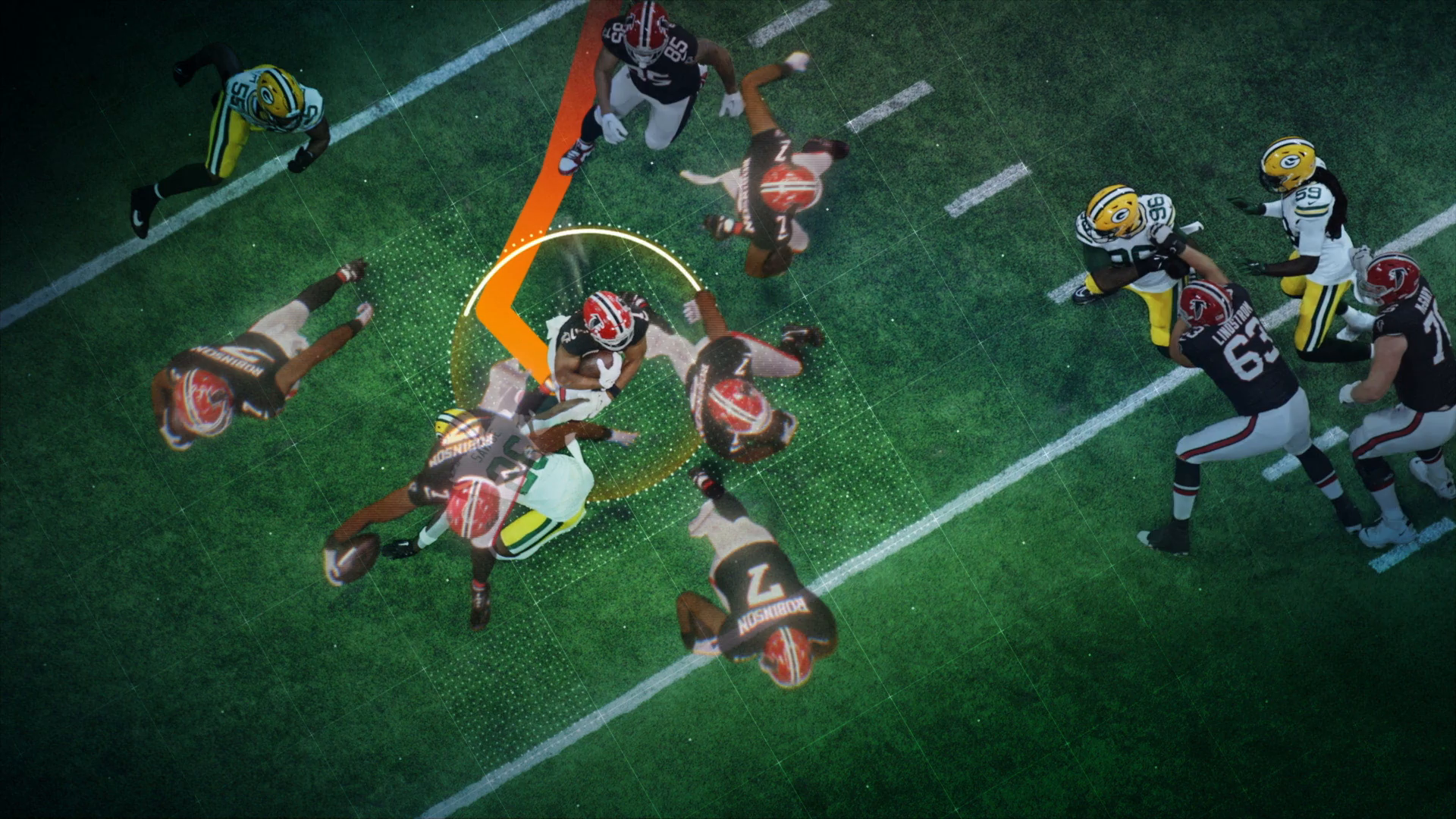
So the visual language needed to establish relationships: the real player and the digital twin, the physical action and the measurement, the football field and the analytical view. Each shift had to make the idea clearer without asking the audience to stop watching the game.
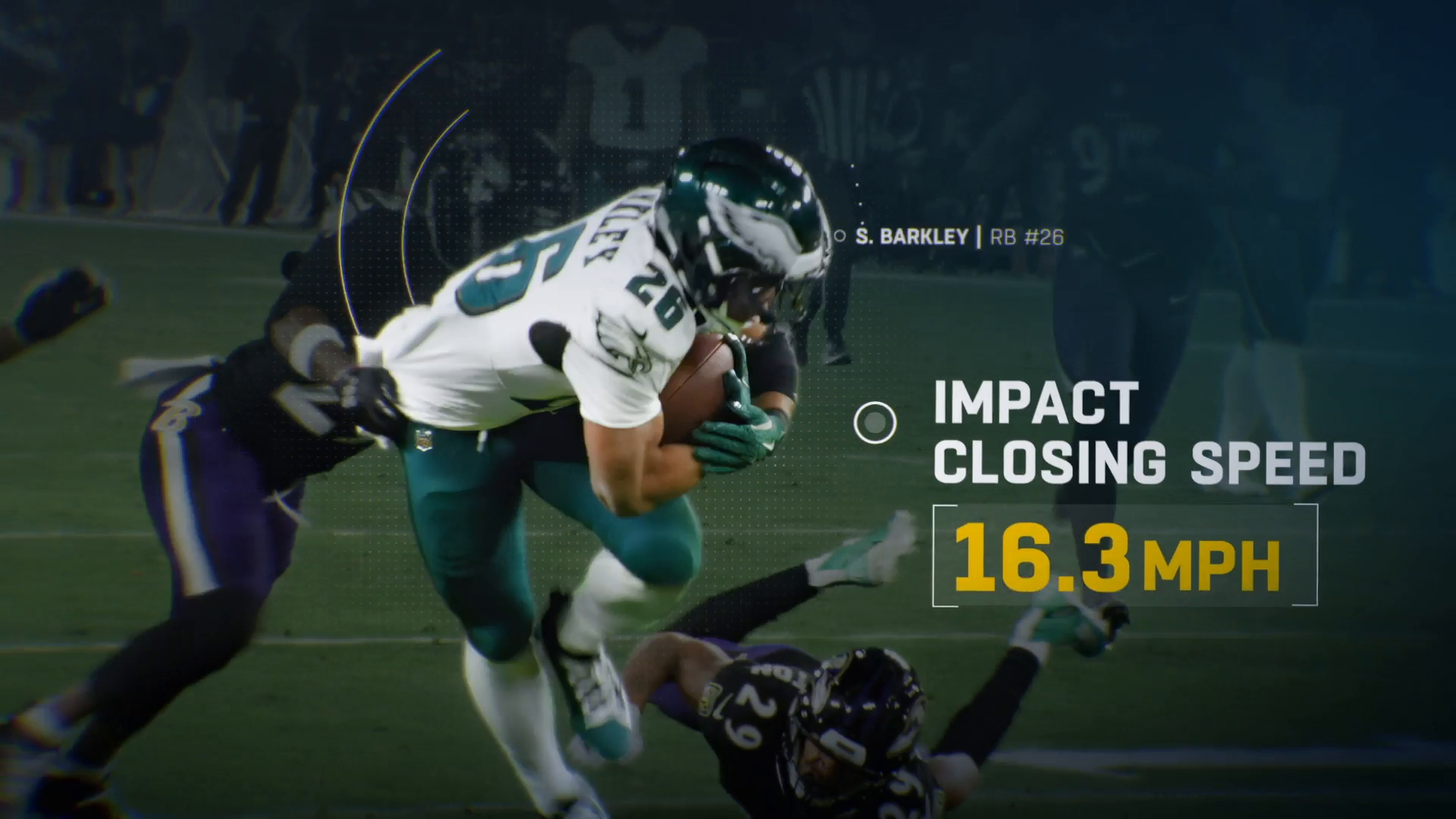
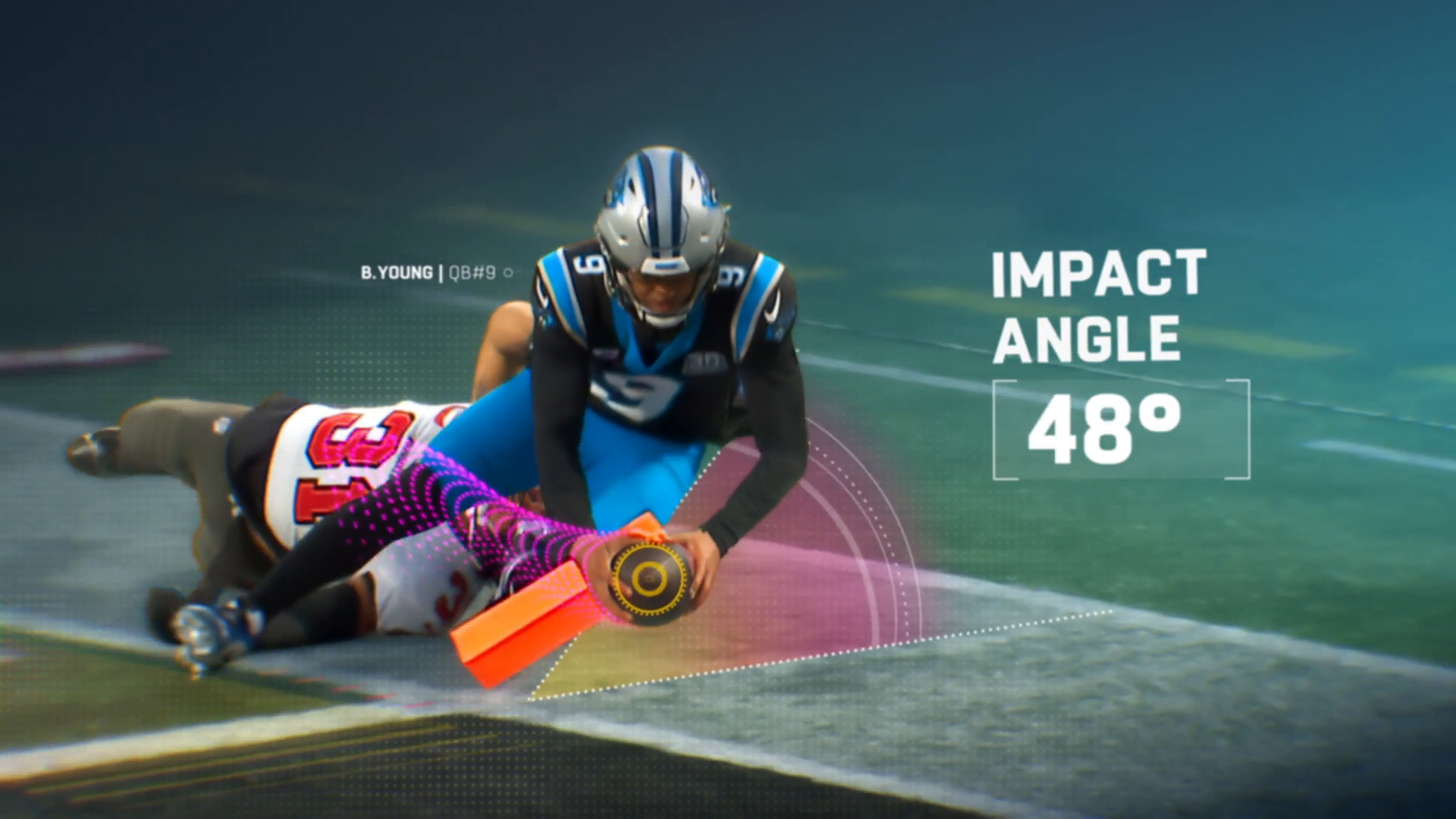
Finished Digital Athlete composite

THE CG CAN'T JUST LOOK COOL.

You can make a gorgeous digital football player. You can cover a stadium in tracking points. You can fill the frame with numbers.

None of that helps if the viewer can't connect the visualization to the athlete.

The CG players had to look and move as though the real person in the footage had been duplicated. The challenge was likeness in motion: enough physical credibility that the viewer accepts the twin as an extension of the football they have just seen.

Once that connection holds, the film can move somewhere the camera can't. We can reveal a layer of information around an action, isolate its important characteristics and show the same movement inside a constructed visual world.

The realism earns the abstraction.

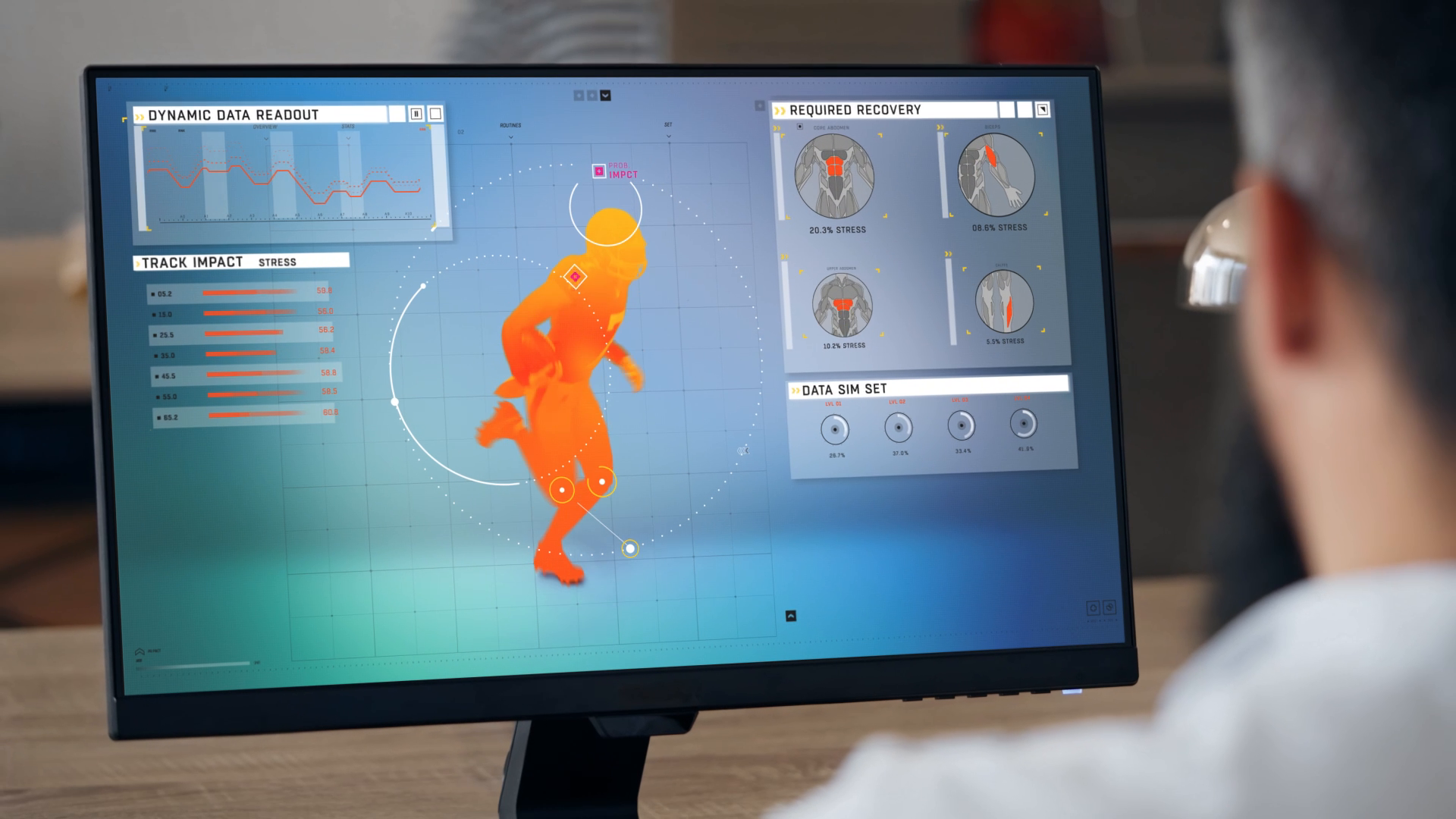
Finished analytical graphics composite

GIVE EVERY GRAPHIC A JOB.

With no ready-made on-screen interface to inherit, the design had to establish its own priorities. The viewer needed to connect a graphic to the physical action, understand what it was emphasizing and keep following the film.

That made hierarchy part of the communication problem. Labels, tracking marks and motion need to work in relation to each other. If they all ask for attention at once, the frame communicates effort rather than information.

Design tells us where to look. Animation tells us when. Editorial gives the thought enough time to land.

Finished overhead field visualization

THE CUT HAS TO BE BUILT FOR THE INFORMATION.

Editorial and VFX worked closely together on this film because each changes the demands on the other.

A compelling football image has immediate physical energy. A visualization may need a different rhythm so that the viewer can recognize what changed. The cut has to make room for both without feeling as though it has stopped for an explanation.

The same applies to the transition back. Once a digital sequence has made its point, real football restores the stakes. These are athletes in a physical game, not characters living inside a software demo.

Keeping those worlds connected was the full-post problem. The CG needed to belong beside the source footage. The graphics needed to support the meaning of the sequence. Color, sound and finishing needed to carry the viewer across the joins.

The result should feel like one film even when the image is doing several different kinds of work.

Digital Athlete screen visualization

COMPLEXITY ISN'T THE SAME THING AS CLARITY.

The audience doesn't need to leave with a working knowledge of computer vision or machine-learning models. It needs a usable picture of what the technology makes possible.

There is a digital counterpart to the athlete. It relates to real football. It gives the NFL another way to study what happens to players.

Making that understandable is the creative job. The system's scientific capabilities belong to the NFL and AWS; the film's contribution is giving the audience a way into them.

Finished Digital Athlete composite

WHAT THE JOB ACTUALLY PROVES

Digital Athlete shows how we find a visual idea inside a technically dense brief and develop the pieces of post around it. It also shows why credible CG and clear information design need to be part of the editorial conversation.

That problem extends well beyond sports. Software, healthcare technology, automotive systems and data products often do important things that are difficult to see.

Finished analytical graphics composite

WHAT THIS MEANS FOR YOU.

Got a product that's difficult to explain? Good.

Bring us in while the story is taking shape. We'll work out what the audience actually needs to understand, what can be communicated visually and how much information the film can carry without losing its momentum.

The simpler it feels, the more work may have happened underneath.

Finished overhead field visualization
Next projectThe Boss Baby →